
Ranch roads
Caliche ranch roads,built and graded.
Ranch roads and long drives cut in, crowned and surfaced with caliche or base, with the water turned off the road so it lasts. New roads to a homesite, a tank or a back pasture, and old roads regraded.
- Caliche and base
- Crowns and ditches
- Culverts and crossings
- 6 inOf fast-moving flood water can knock over an adult, per the National Weather ServiceSource
- 12 inOf rushing water can carry away most cars. Turn around, don't drownSource
- 560NRCS practice code for an Access Road, one of the EQIP conservation practicesSource
- FreeEstimates. A name and a phone number to start
Ranch Roads
A road you can count on
after the rain.
Out on rural land the road is everything. It is how the feed truck, the concrete truck and the fire truck get in, and how you get out after a storm.
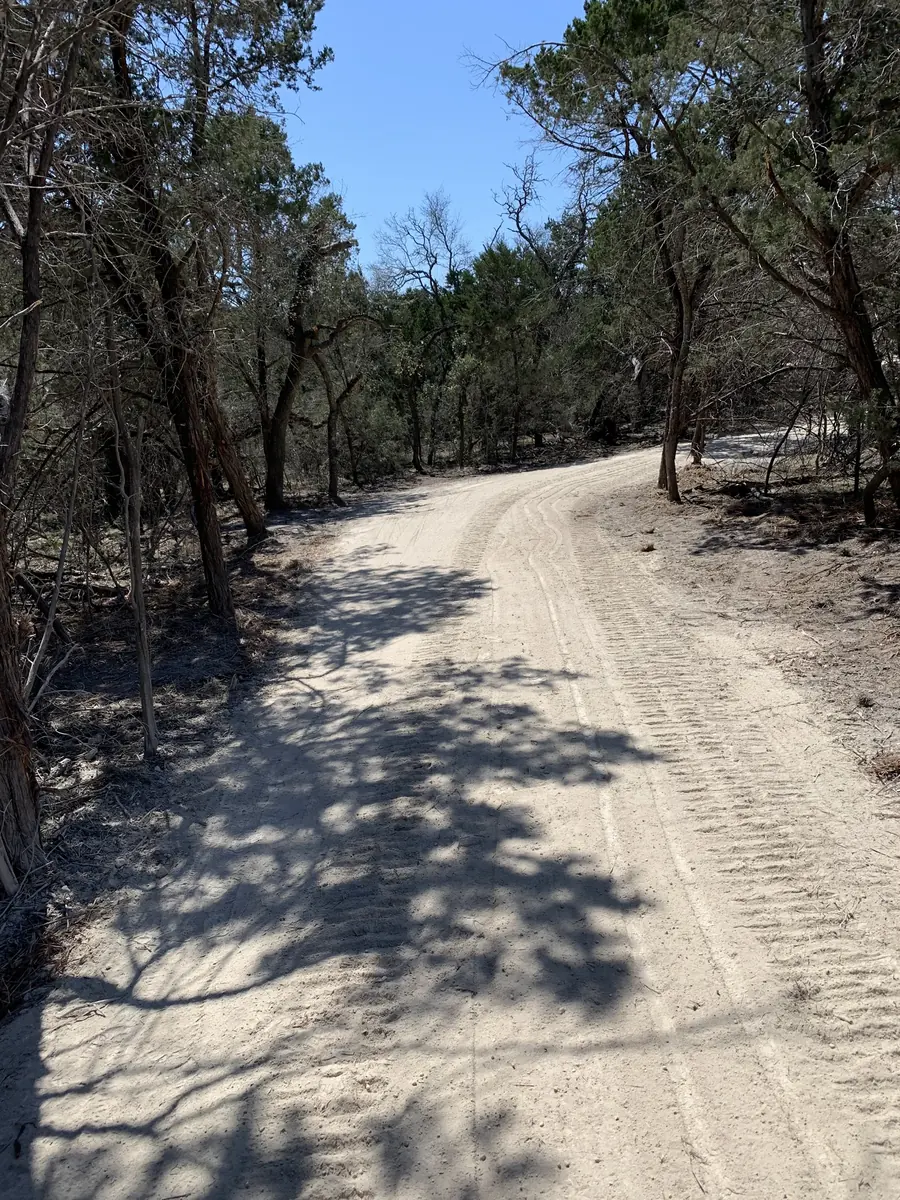
Most ranch roads in this part of Texas are caliche or road base. Caliche is "a shallow layer of soil or sediment in which the particles have been cemented together", usually by calcium carbonate, and it is common in dry country (Geology.com). Packed and shaped right it makes a firm road. Shaped wrong it ruts and washes.
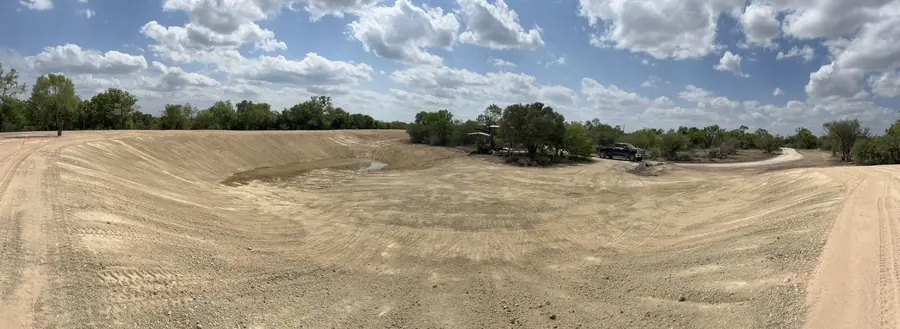
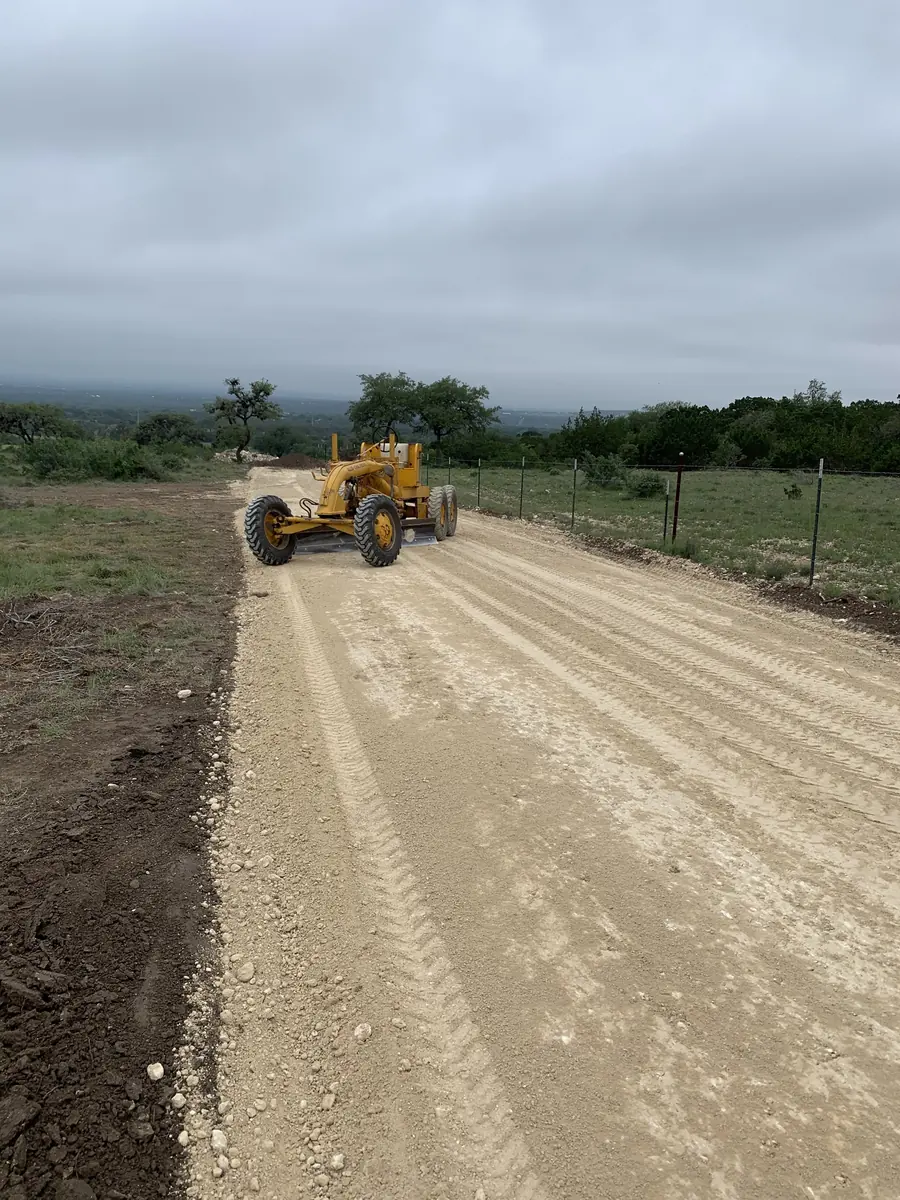
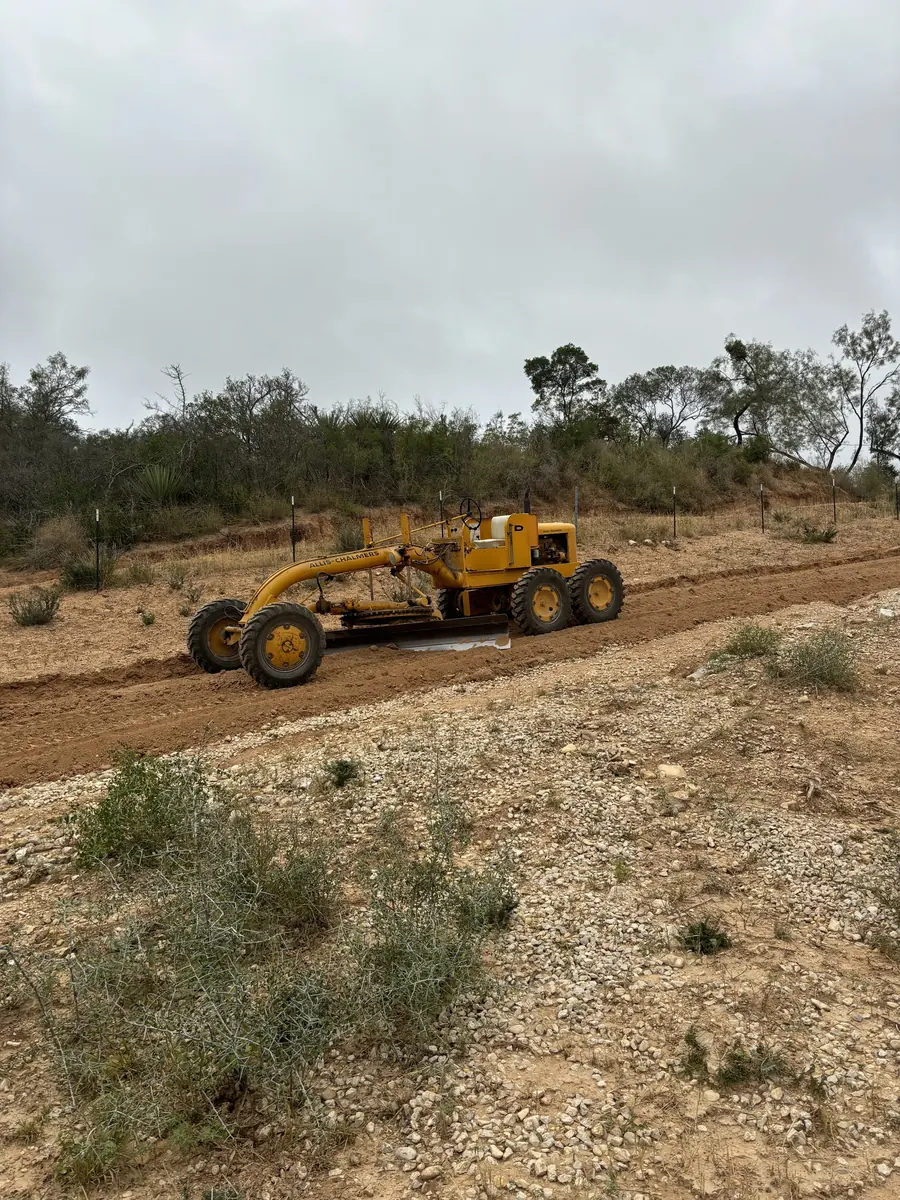
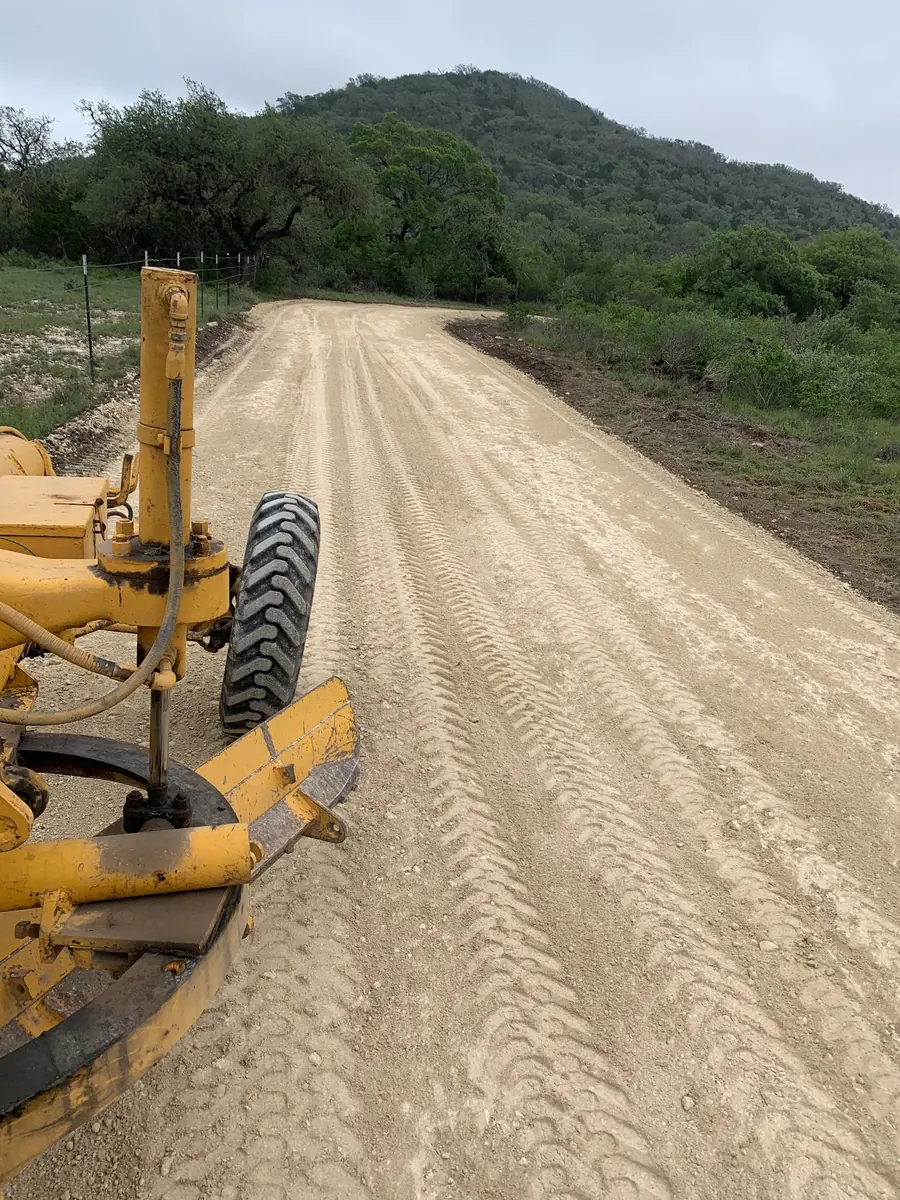
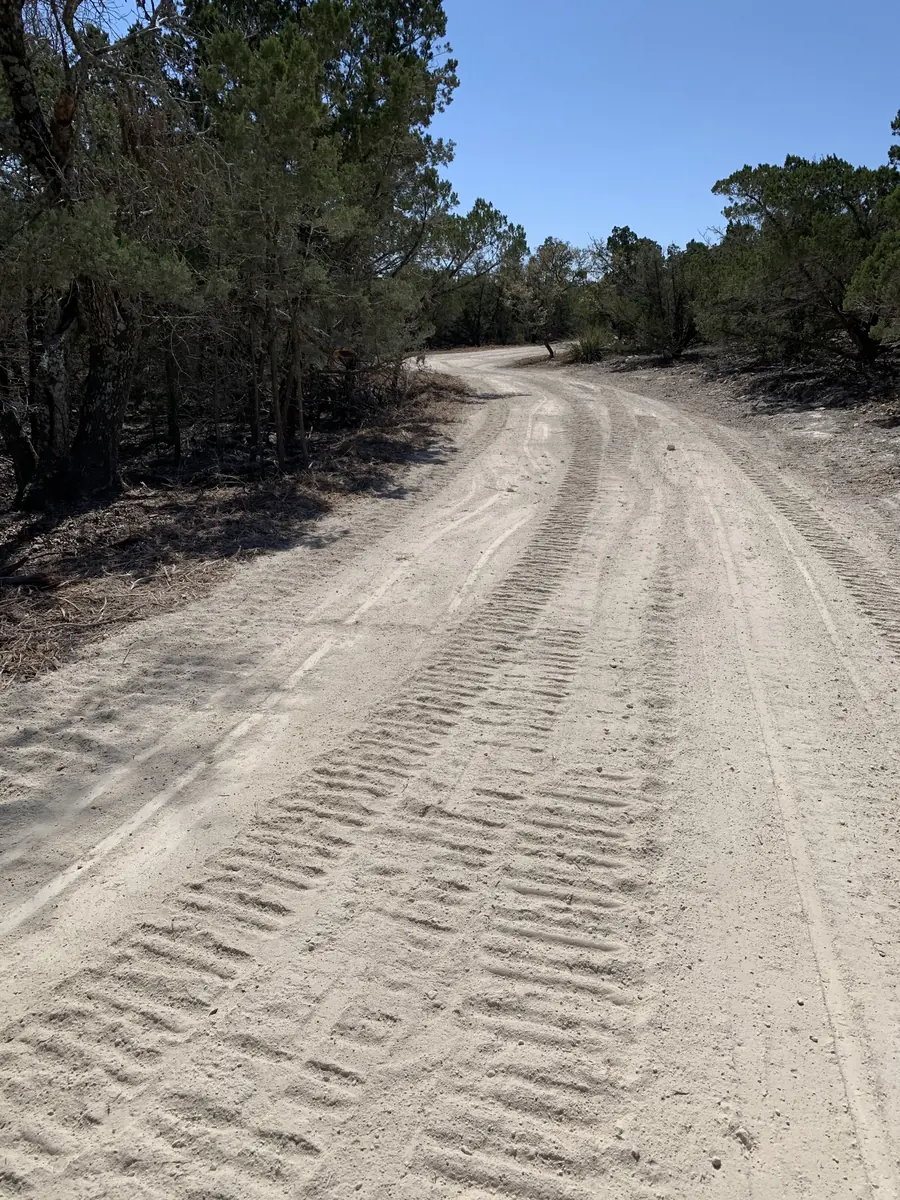
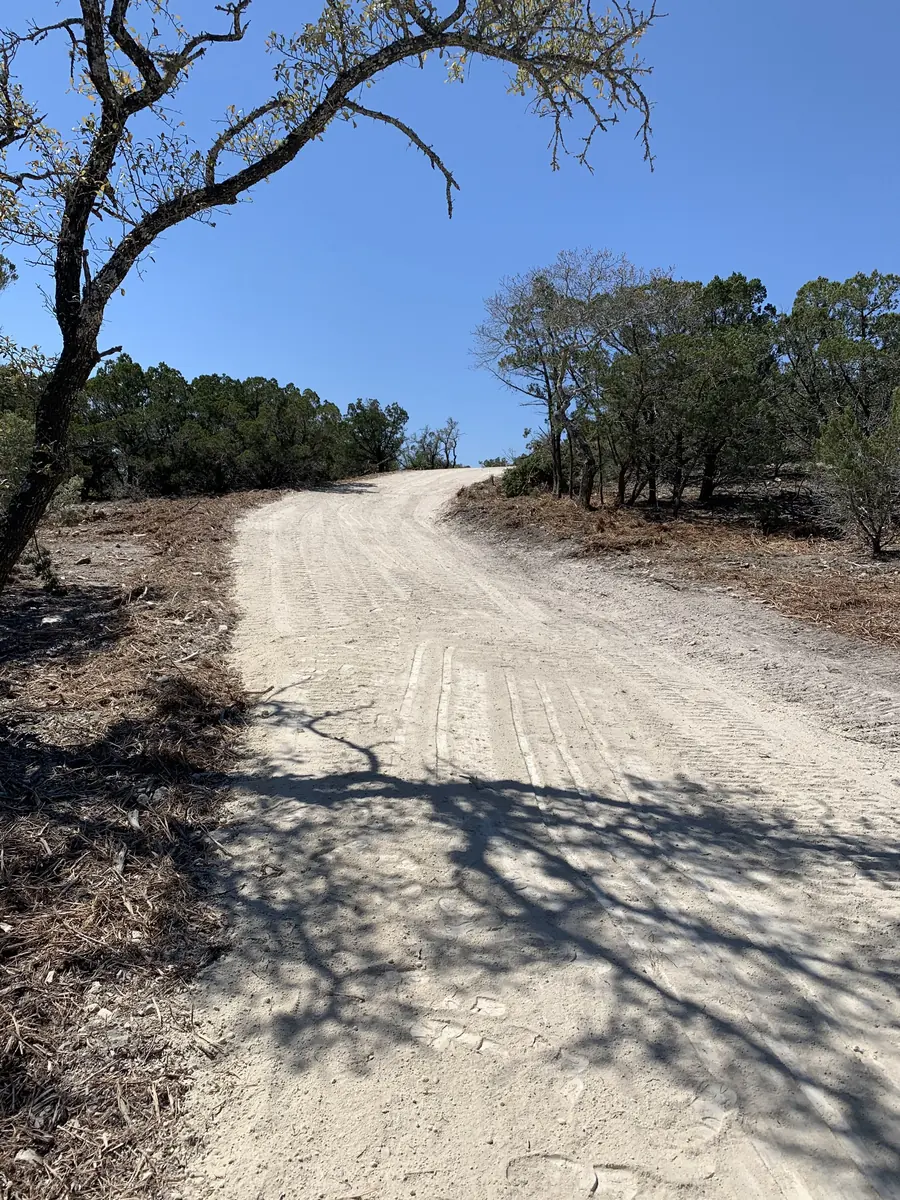
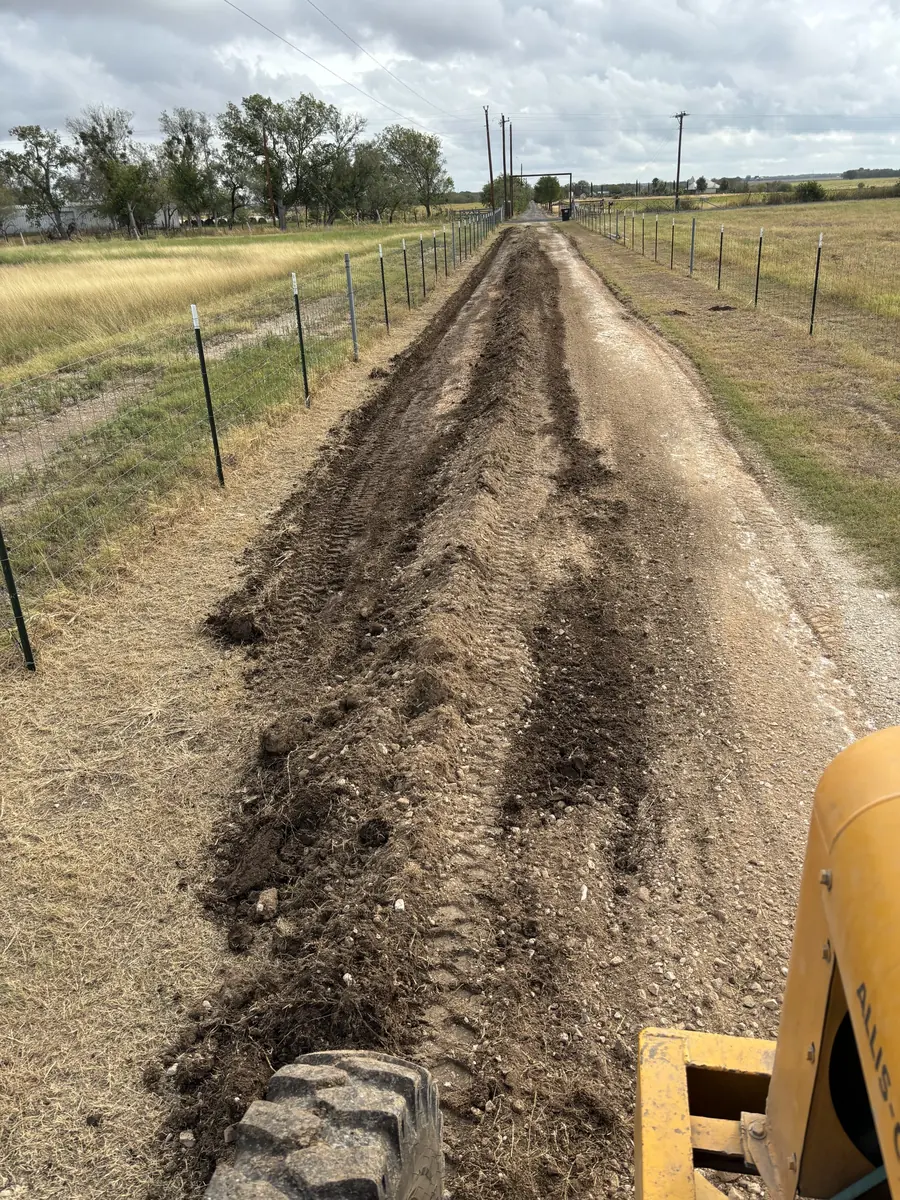
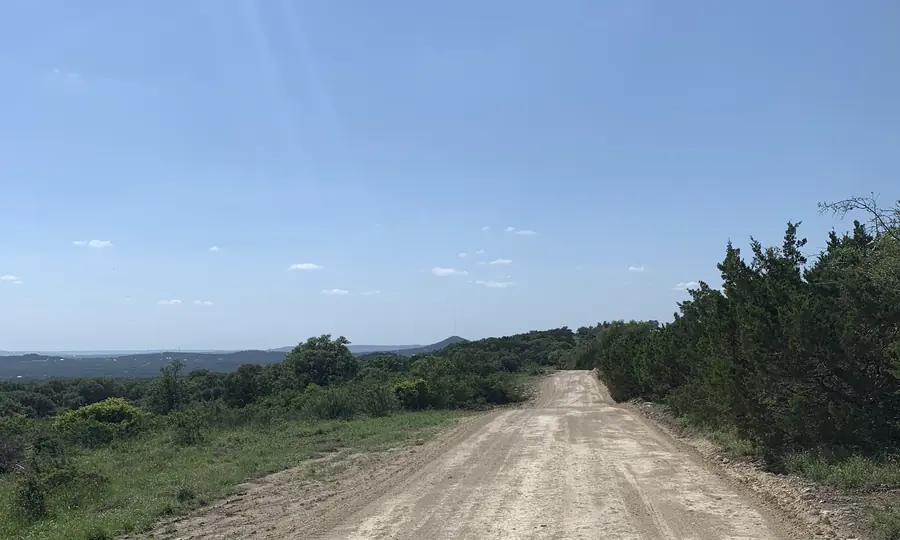
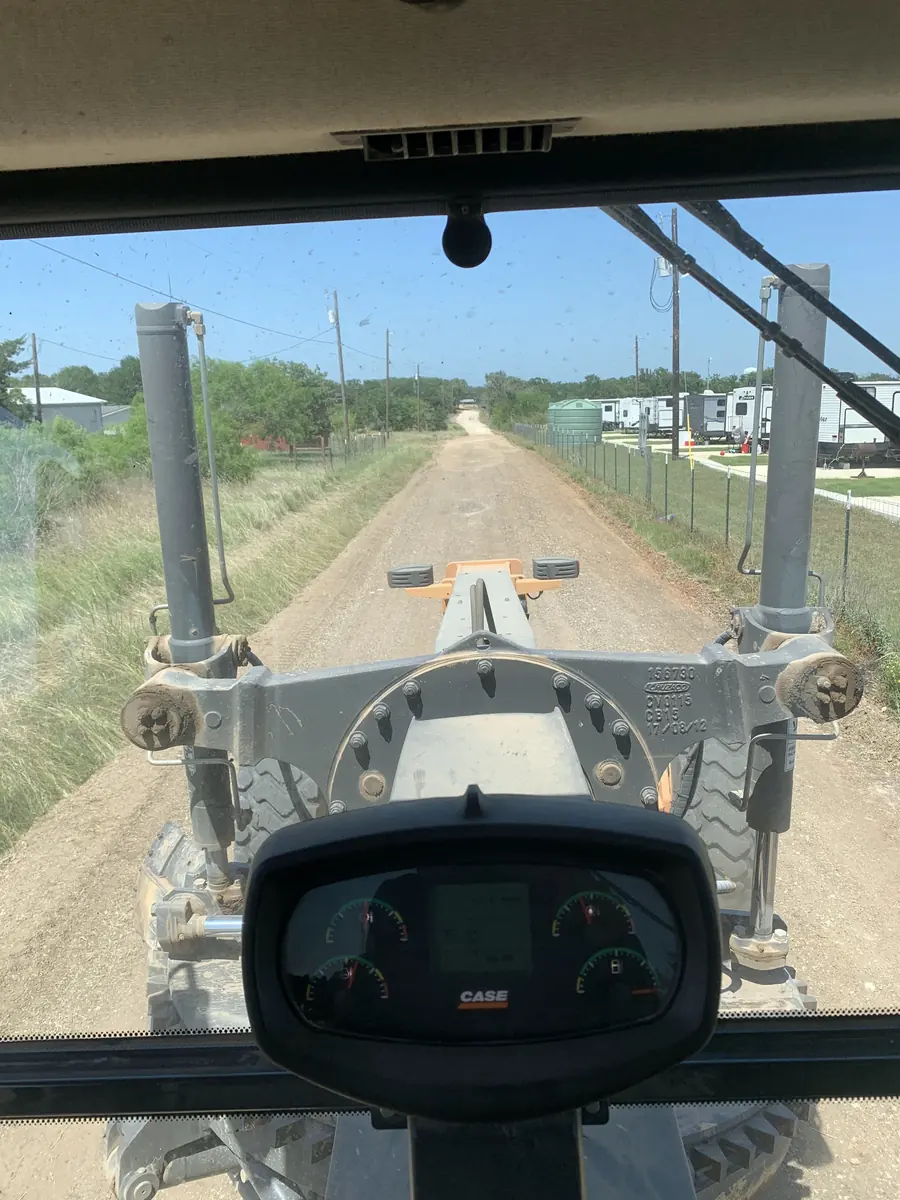
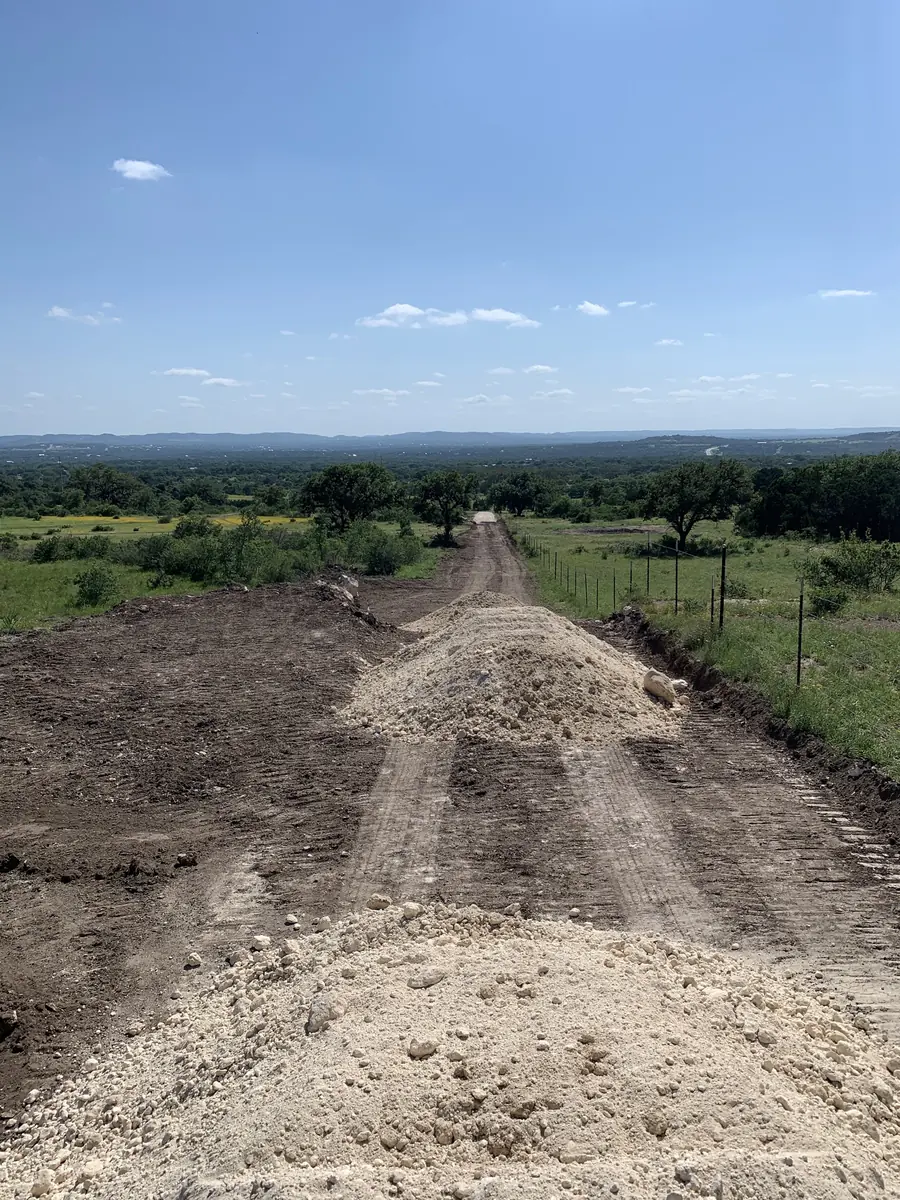
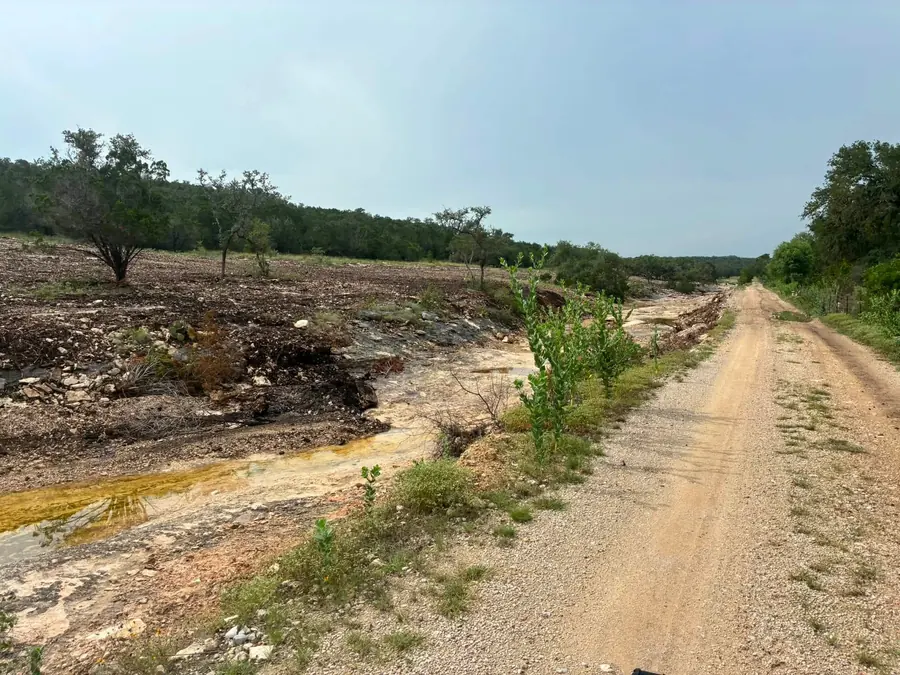
Our job photos show caliche and gravel ranch roads, freshly graded drives at the gate, and a motor grader cutting road edges and ditches. The difference between a road that lasts and one that washes out is almost always water, so that is where the planning goes.
What the work covers
What ranch road work covers
Not sure if we handle it? Call and ask.
New ranch roads
Roads cut in to a homesite, a barn, a tank or a back pasture, laid out on the high ground.
Caliche and base
Surfacing with caliche or crushed base, spread, shaped and packed. See the material comparison.
Crowns and ditches
A raised center so rain runs off to ditches instead of down the middle.
Culverts
Pipe where the road crosses a draw, sized to the water it has to carry.
Low-water crossings
Hardened crossings built to be driven when water is low, and left alone when it is not.
Regrading old roads
Worn, rutted and potholed roads regraded and reshaped.
How it is done
How a road gets built
- 01
Lay out the line
High ground where possible, gentle grades, and as few creek crossings as the land allows.
- 02
Cut and shape
The road bed cut, the subgrade shaped and packed down in layers.
- 03
Surface
Caliche, base or millings spread, crowned and compacted.
- 04
Move the water
Ditches, turnouts, culverts and crossings so the water leaves the road.
Water is what ruins roads
Rain that runs down a road cuts ruts, then gullies. Rain that sits on a road softens it. A road built to last moves water off, fast:
- Crown. The middle sits higher than the edges, so water sheds sideways.
- Ditches and turnouts. The water that sheds off needs somewhere to go besides along the road.
- Culverts. Where the road crosses a draw, a pipe sized to the flow carries it under.
- Low-water crossings. Where a creek is too big for a pipe, a hardened crossing lets you drive across when it is low.
Read ranch road drainage for the detail.
Crossings, floodplains and safety
Building in or near a floodplain can need a review. In Bexar County, Public Works "must review all construction activities conducted on property that is in proximity to the 100-Year Floodplain", with a fee per activity, and a flood study by an engineer may be required (Bexar County Public Works). Other counties have their own rules, so check before a crossing goes in.
And never drive a crossing with water running over it. The National Weather Service warns that 6 inches of fast-moving water can knock over an adult, 12 inches can carry away most cars, and 2 feet can move SUVs and trucks (NWS).
Roads and cost-share
Access Road (practice 560) is one of the NRCS conservation practices, listed alongside Brush Management, Pond and Watering Facility (NRCS practice list). If a road is part of a larger conservation plan, ask your local NRCS office whether EQIP can help. See the EQIP guide.
On the job
Ranch roads, up close
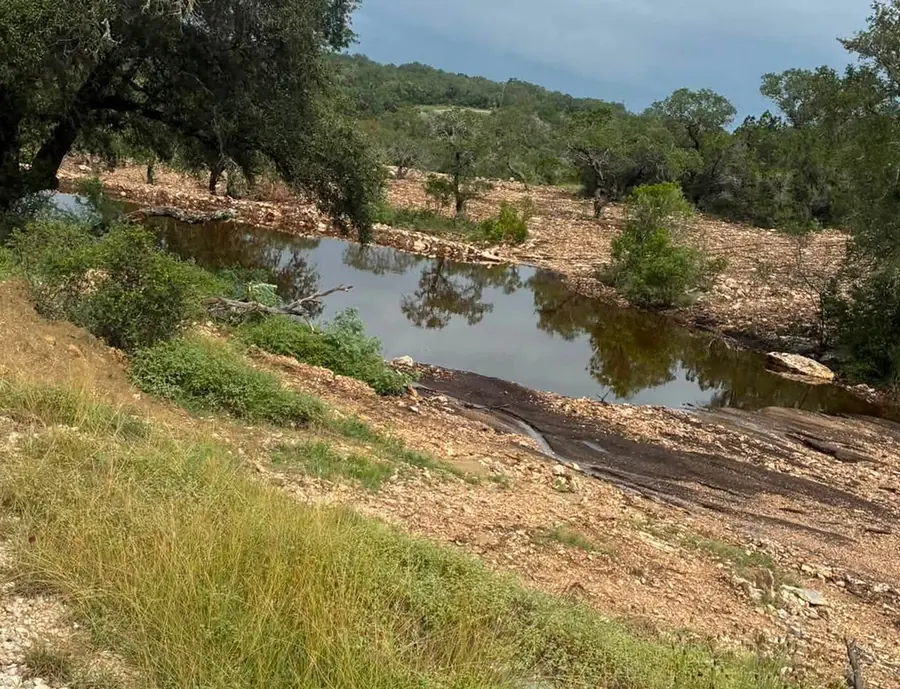
Photos from Highlander Construction jobs. See more in recent work.
Questions
Ranch roads questions
What is a caliche road?
A road surfaced with caliche, a layer of soil cemented together, usually by calcium carbonate. Spread, crowned and packed, it makes a firm road. It needs good drainage to last.
Caliche or road base?
Both can make a good ranch road. The right one depends on what is available nearby, the traffic, the slope and how wet the spot gets. See the comparison guide.
How do you keep a road from washing out?
Move the water off it: a crown, ditches and turnouts, culverts at the draws and hardened crossings at the creeks. Most washouts start where water runs down the road.
Do I need a permit for a low-water crossing?
Near a floodplain, possibly. In Bexar County, construction near the 100-year floodplain goes through a county review. Check with your county before work starts.
Can you fix my old road?
Yes. Worn and rutted roads can be regraded and reshaped, and drainage added where the water has been winning.
Can you put millings on a ranch road?
Yes. A San Antonio millings supplier gives 4 to 6 inches for heavy ranch roads. See asphalt millings driveways.
Where we do it
Towns and counties
Highlander Construction is based in Helotes and serves these areas. Not listed? Call and ask.
Related services
Asphalt Millings, Caliche & Gravel Driveways
Driveways surfaced with asphalt millings, caliche or gravel, on a graded base that drains.
See the service Related serviceLand Clearing
Brush and cedar cleared, the trees worth keeping left standing, and the debris burned when allowed, stacked or hauled off.
See the service Related serviceExcavation & Grading
Digging, cutting and moving dirt on rural ground, from stock tank basins to building sites.
See the serviceGuides
Ranch road drainage: crowns, culverts, crossings.
Crowns, ditches, turnouts, culverts and low-water crossings, plus floodplain review and flood safety.
Read the guide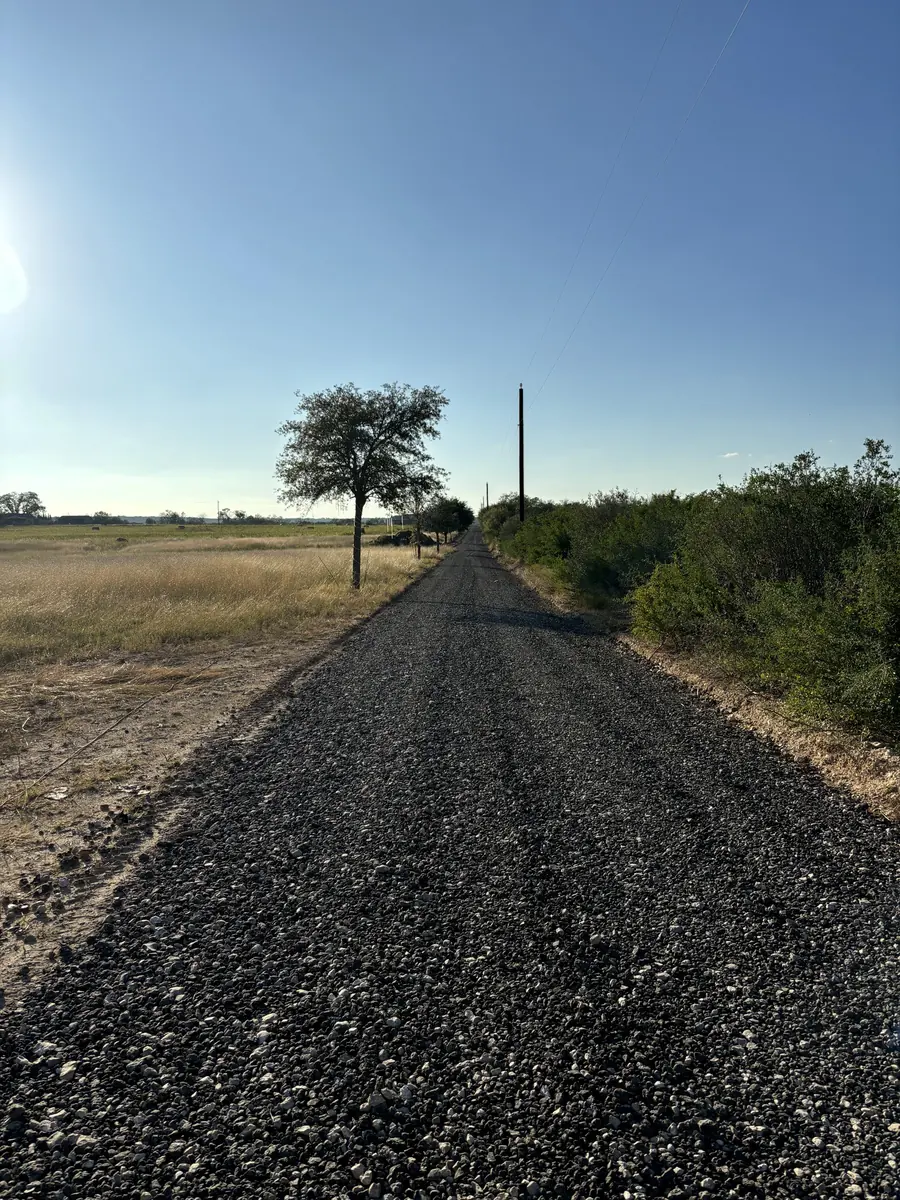
Caliche, road base or asphalt millings?
What each surface is, where it fits, what sets the price and why drainage matters more.
Read the guide
EQIP cost-share for brush, ponds and roads.
How EQIP works, the practice codes that match land work, and where a contractor fits in.
Read the guide