
Earthen stock tanks and ponds
Earthen stock tanksand ponds, dug to hold water.
Earthen stock tanks and dirt ponds dug for livestock, wildlife and ranch water. The basin is cut, the spoil goes up into a berm, and the rain does the rest. Siting and soil come first, because a tank that will not hold water is just a hole.
- Dirt tanks
- Spoil berms
- Soil checked first
- 200Acre-feet: the most a domestic and livestock reservoir can hold without a water-rights permitSource
- 12 to 15Gallons a day per head for beef cattle and horses, per the NRCS pond handbookSource
- 3 ftMinimum thickness of tight, undisturbed soil under a reservoir, per NRCSSource
- 30%Clay in compactable soil, the level the Texas Farm Ponds guide calls idealSource
Stock Tanks & Ponds
A dirt tank
that holds water.
In Texas ranch talk a stock tank is an earthen pond, not a metal trough. It is a basin dug where runoff collects, with the dirt from the dig pushed up into a berm, so it catches rain and holds it for cattle, horses and wildlife.
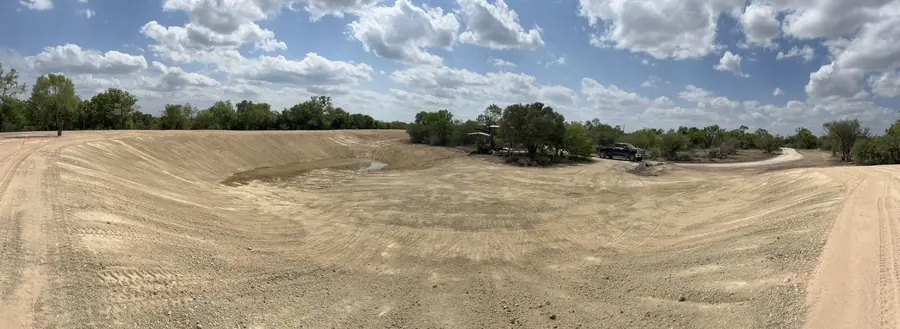
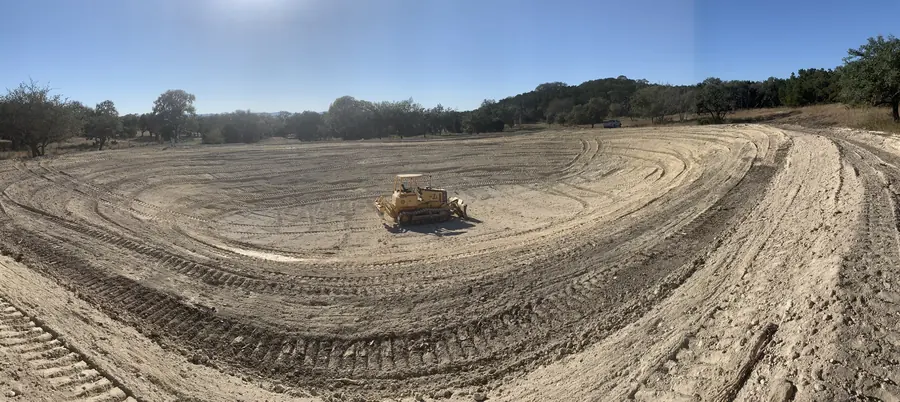
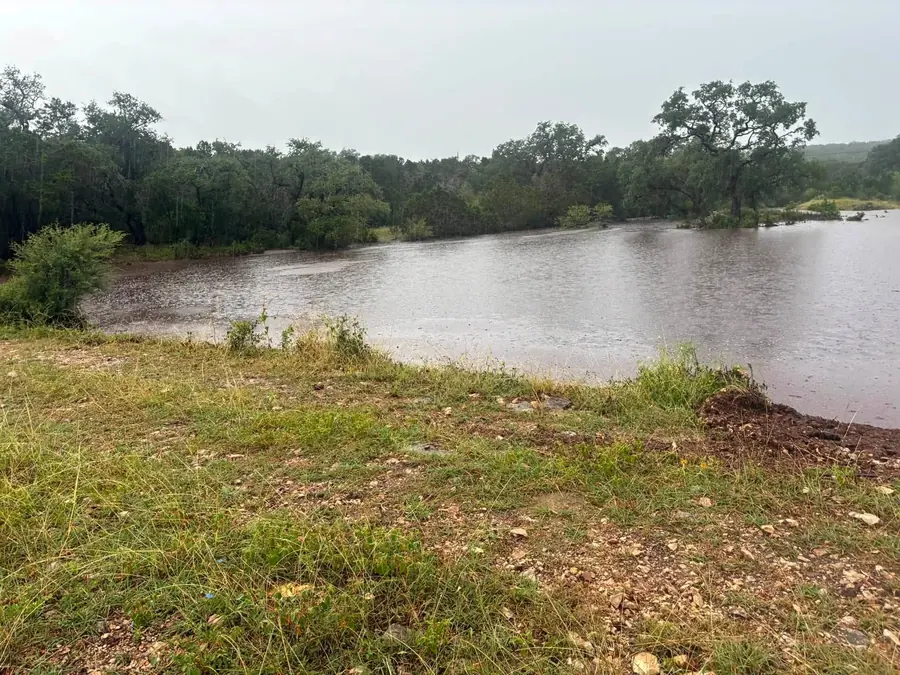
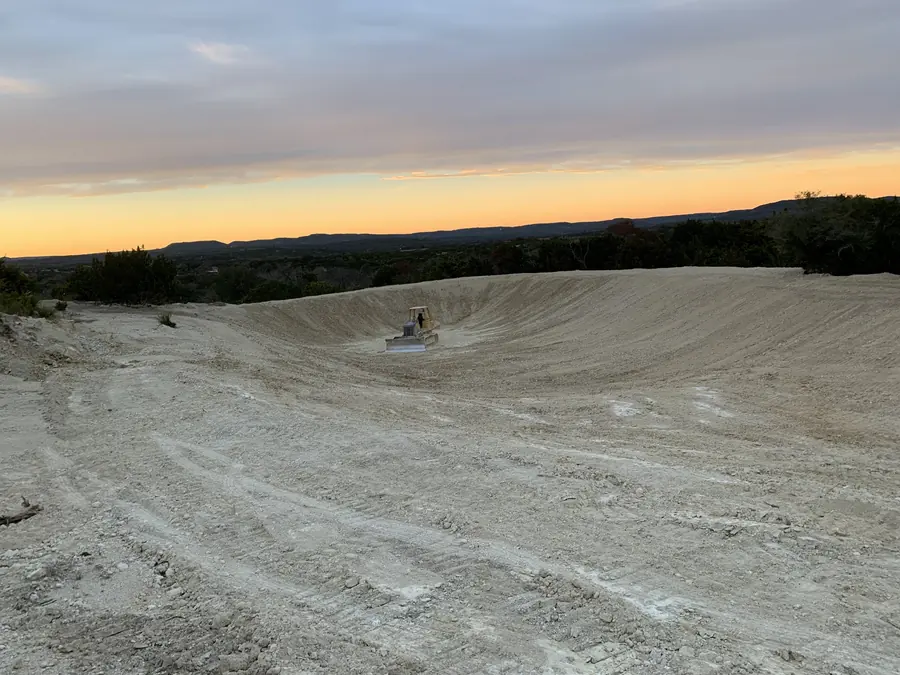
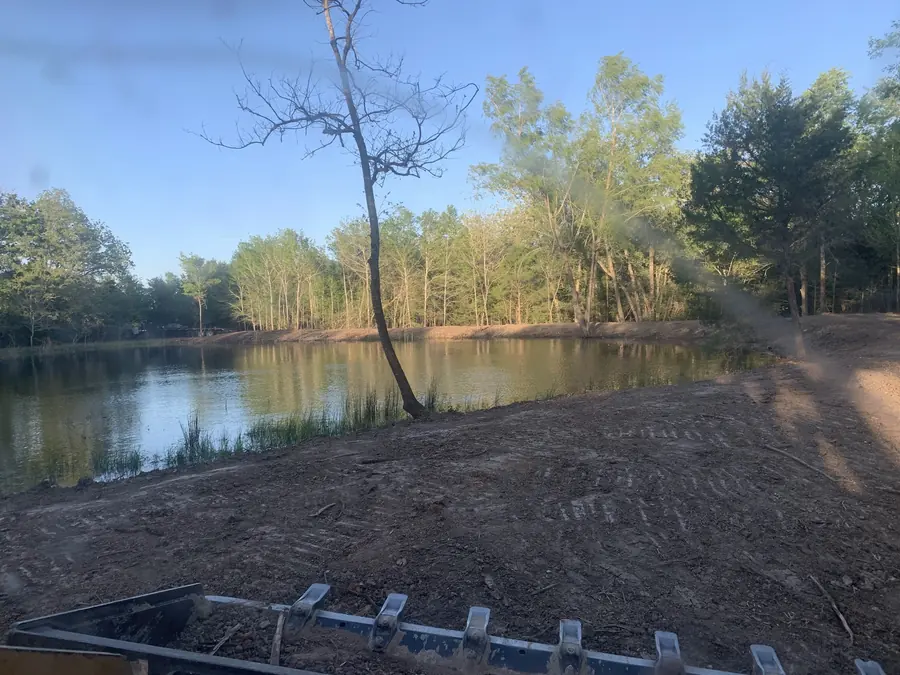
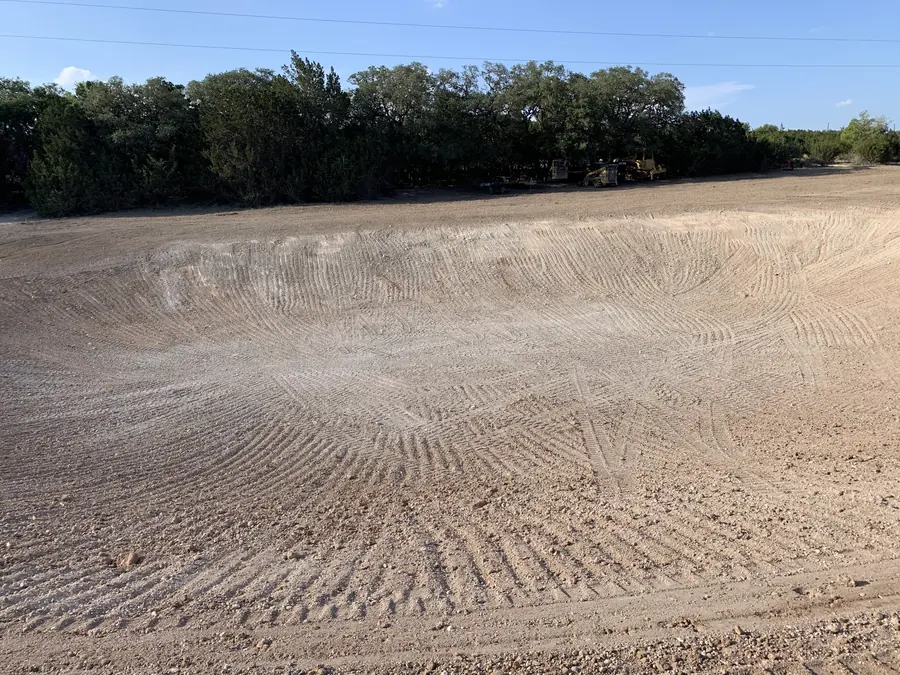
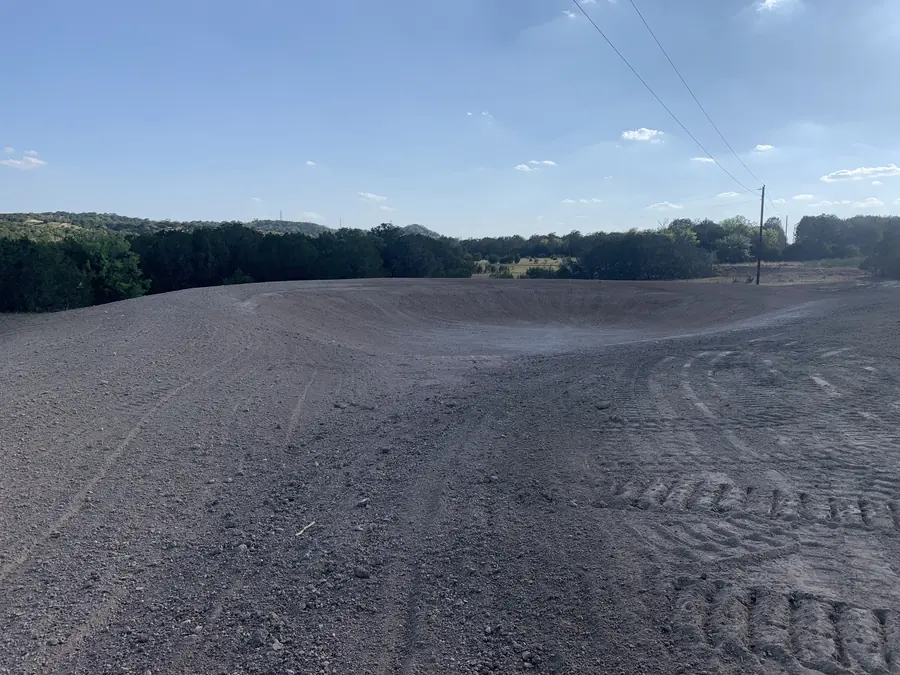
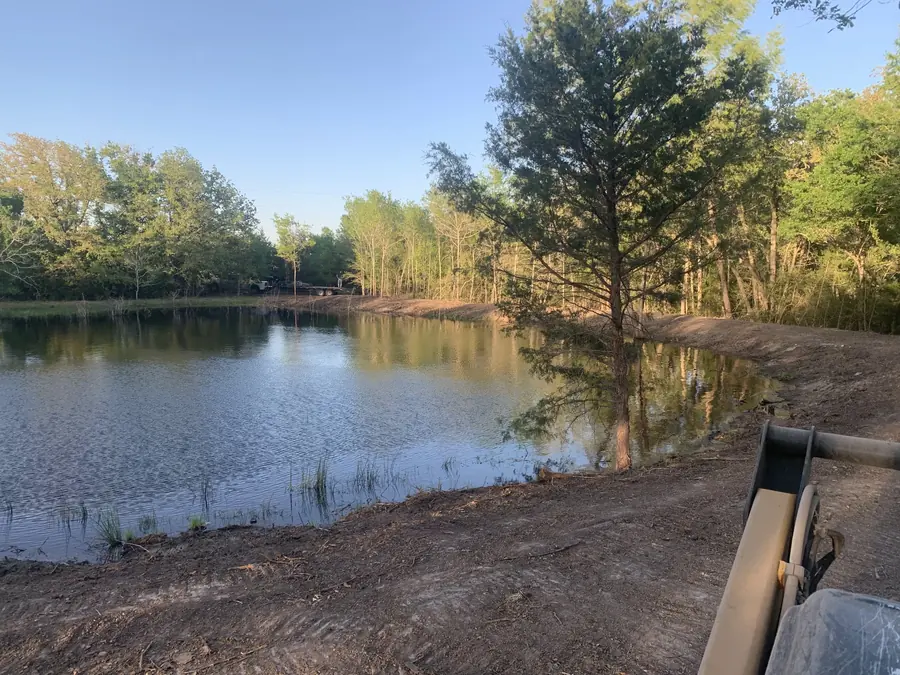
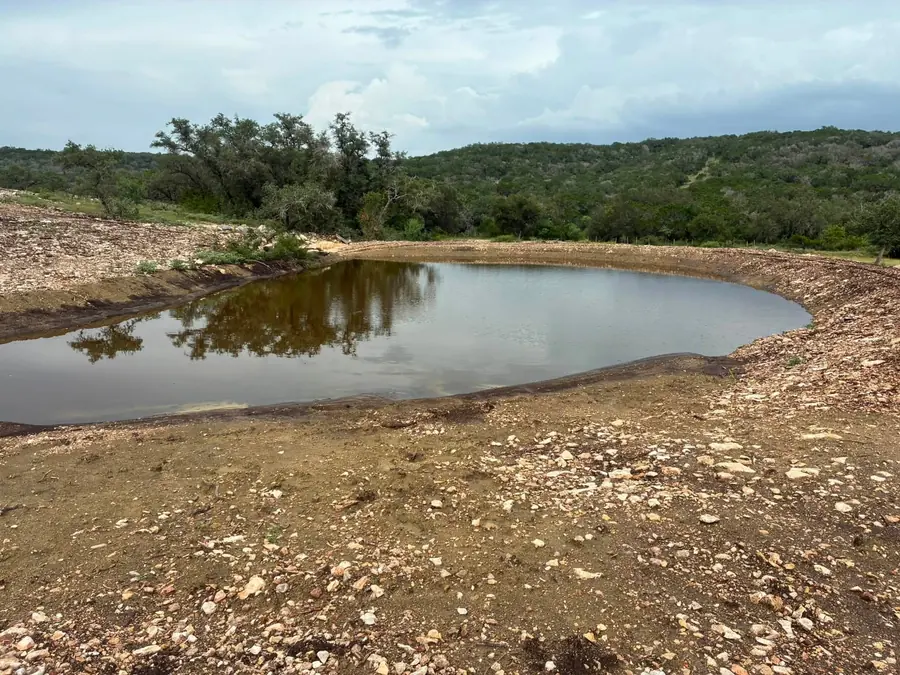
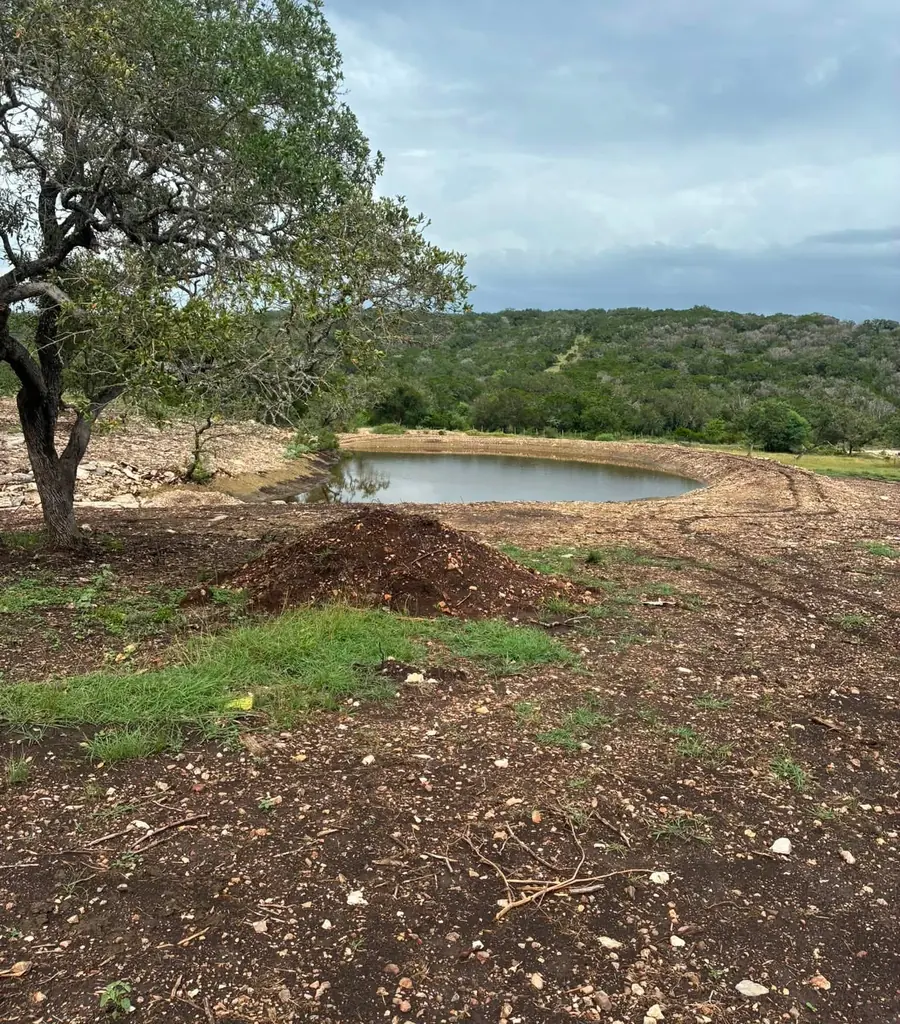
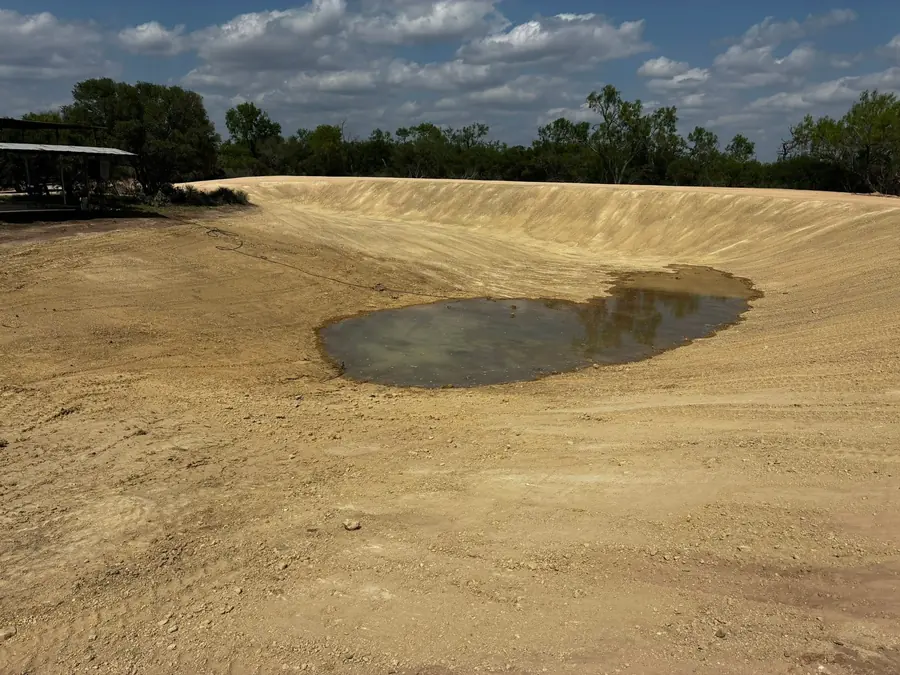
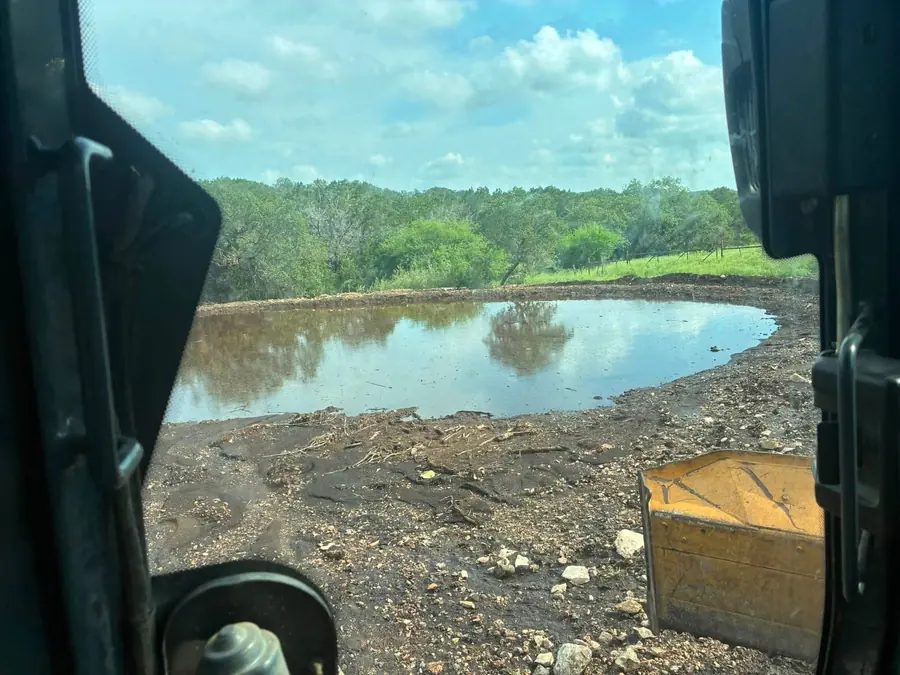
Our Facebook page shows the whole run of it: a raw basin graded smooth, a fresh tank seen from the seat of the machine, a new tank with its spoil berm and an oak kept in front, and a finished pond with grass back on the banks.
Whether a tank holds water is decided mostly by the soil, so we look at that before anything else. Limestone, gravel and sand all leak. Clay holds.
What the work covers
What stock tank work covers
Not sure if we handle it? Call and ask.
New stock tanks
Earthen tanks dug and shaped for livestock water, sized to the herd and the catchment.
Wildlife water
Ponds and water sources for deer and birds, often part of a wildlife plan.
Spoil berms
The dirt from the dig shaped into a berm around the tank, not just dumped.
Soil checks first
Test holes before the dig, because clay content decides whether a tank holds.
How it is done
How a tank gets built
- 01
Pick the spot
Where runoff collects, where the dam or berm can sit, and where stock and trucks can reach it.
- 02
Check the soil
Test holes to see what is under the surface. NRCS suggests three or four borings per acre where soils are uniform.
- 03
Dig and shape
The basin is cut with a deep section, the banks sloped, and the spoil shaped into the berm.
- 04
Compact and let it fill
Banks and berm compacted, the area tidied, and then the rain fills it.
Sizing a tank
Start with the water your animals need. The NRCS pond handbook puts beef cattle and horses at 12 to 15 gallons per head per day, and sheep at about 2 (NRCS Handbook 590). Then allow for what the sun and the soil take, and for the dry years.
Depth is what carries a tank through a drought. NRCS says ponds should be deeper where seepage is more than 3 inches a month or where a year-round supply is essential. For South and West Texas, the Texas Farm Ponds guide aims for 12 to 16 feet of deep water in part of the pond, with shoreline slopes of at least 2.5 to 1 (Texas Farm Ponds).
For a sense of scale, a 2011 Land Report article described a typical ranch tank on one large Texas ranch as about 5,000 cubic yards dug out, around a million gallons, about 14 feet deep and 150 feet across with 4 to 1 slopes (The Land Report). Your tank will be sized to your land.
Soil decides whether it holds
The NRCS handbook's test for a reservoir site is a layer of tight soil at least 3 feet thick, with at least 20 percent passing a No. 200 sieve (fine particles) and a plasticity index above 10. Coarse sands and gravels are usually unsuitable, and "limestone areas are hazardous" because hidden crevices or sinks can drain a pond (NRCS Handbook 590).
The Texas Farm Ponds guide calls compactable soil with at least 30 percent clay ideal, and recommends a core trench under the dam to cut seepage (Texas Farm Ponds). Where the soil is marginal, the published fixes are compaction, a compacted clay blanket, bentonite, or a liner (Soil Considerations in Pond Construction).
That is why we look before we dig. Read building a stock tank that holds water for the detail.
Permits and rules
Texas Water Code section 11.142 says a person may, without a permit, build on their own property a dam or reservoir with normal storage of not more than 200 acre-feet of water for domestic and livestock purposes (Tex. Water Code 11.142). Commercial uses are not covered. Related parts of the same section deal with fish and wildlife ponds on qualified open-space land.
- Above 200 acre-feet, the Texas Farm Ponds guide says to get a professional design.
- Near a 100-year floodplain in Bexar County, construction activity goes through a county floodplain review (Bexar County Public Works).
- Over the Edwards Aquifer in Bexar, Medina or Comal County, agricultural activities are a listed exclusion from TCEQ's rules, but confirm with TCEQ's San Antonio office (30 TAC 213.3).
None of this is legal advice for your land. We will point you to the right office.
On the job
Stock tanks, up close
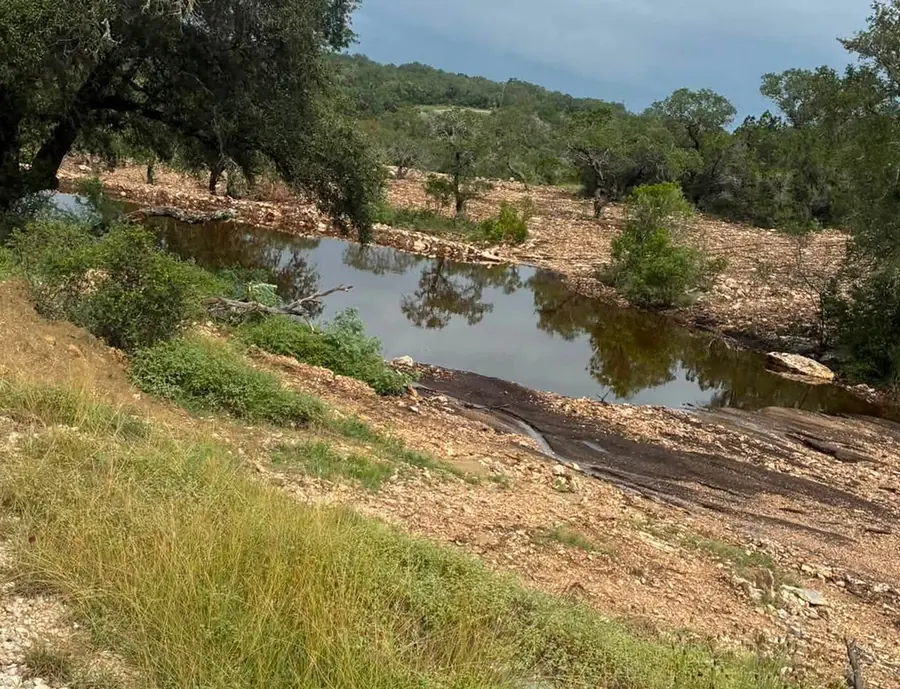
Photos from Highlander Construction jobs. See more in recent work.
Questions
Stock tanks questions
What is the difference between a stock tank and a pond?
In Texas they are mostly the same thing: an earthen basin that catches and holds runoff. Stock tank is the ranch word for one built for livestock water. Online, "stock tank" also means metal troughs and pools, which is not what we build.
Do I need a permit to build a stock tank?
Texas Water Code 11.142 lets you build a dam or reservoir on your own property holding up to 200 acre-feet for domestic and livestock use without a water-rights permit. Floodplain, aquifer and local rules can still apply.
Will a tank hold water on my land?
That depends on the soil. NRCS calls limestone areas hazardous, and sand and gravel leak. A test hole tells us what is down there before we dig.
How deep should a stock tank be?
Deep enough to ride out a drought. The Texas Farm Ponds guide aims for 12 to 16 feet of deep water in part of the pond in South and West Texas. Your size and depth depend on the herd, the catchment and the soil.
Do you clean out or repair old tanks?
Our Facebook work shows new tanks dug and shaped. Not sure if we handle it? Call and ask. Our leaky tank guide explains the usual causes and fixes.
Can EQIP or a wildlife plan help with a pond?
Pond (practice 378) is an NRCS conservation practice, and TPWD's guidelines list pond construction as an erosion control practice for wildlife plans. Your plan, NRCS and your appraisal district decide what qualifies.
Where we do it
Towns and counties
Highlander Construction is based in Helotes and serves these areas. Not listed? Call and ask.
Pages for your area
Stock tanks dug deep for Bandera County.
Earthen stock tanks and dirt ponds for Bandera County ranches and ranchettes, dug deep enough for the dry years and checked for soil before the dig,...
Read the page Medina CountyStock tanks for Medina County land.
Earthen stock tanks and ponds for Medina County farms and ranches, around Castroville, Hondo and the land between, sized for the herd and checked for...
Read the page Kendall CountyStock tanks and ponds around Boerne and Comfort.
Earthen stock tanks and wildlife ponds on Kendall County land around Boerne and Comfort, built for stock, for wildlife or both, with the soil checked...
Read the pageRelated services
Land Clearing
Brush and cedar cleared, the trees worth keeping left standing, and the debris burned when allowed, stacked or hauled off.
See the service Related serviceRanch Roads
Ranch roads and long drives cut and graded, surfaced with caliche or base, with the water turned off the road.
See the service Related serviceExcavation & Grading
Digging, cutting and moving dirt on rural ground, from stock tank basins to building sites.
See the serviceGuides
Building a stock tank that holds water.
Siting, soil tests, clay, sizing for the herd, depth for drought and the 200 acre-foot rule.
Read the guideLeaky stock tank? Causes and fixes.
Why tanks leak, from limestone and sand lenses to a weak dam, and the published fixes.
Read the guideWhat a stock tank costs depends on.
Dirt moved, soil, rock, access, spoil and design: the things that set the price of a dirt tank.
Read the guideSources
- USDA NRCS, Agriculture Handbook 590: Ponds, Planning, Design, Construction
- Texas Chapter, American Fisheries Society, Texas Farm Ponds
- The Land Report, Building a Stock Tank (2011)
- Texas Agricultural Extension Service, Soil Considerations in Pond Construction
- Texas Water Code 11.142, permit exemptions
- Bexar County Public Works, Floodplain Development Permits
- 30 Texas Administrative Code 213.3, definitions (Cornell LII)