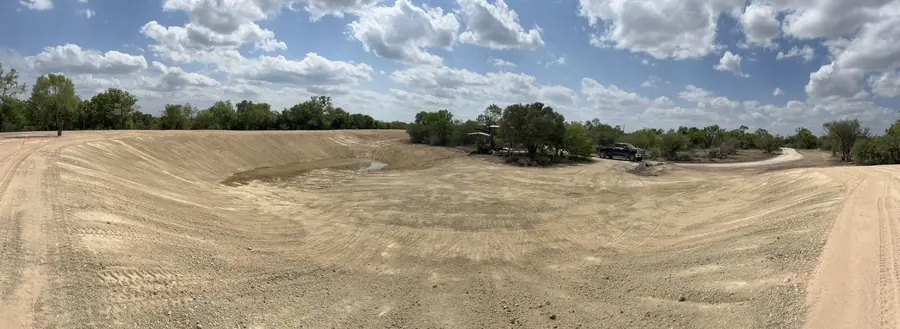

Clear cedar selectively: take out the regrowth and the cedar crowding your pasture, keep the oaks, hackberry and connected strips of cover, and lay the clearings out along the contours. For deer, TPWD suggests clearing 50 percent or less of the brush (TPWD). Check for golden-cheeked warbler habitat if you have tall, old cedar on steep slopes, and do not expect clearing to refill a spring.
What "cedar" is
Texans call Ashe juniper (Juniperus ashei) cedar. Its western cousin, redberry juniper (Juniperus pinchotii), looks similar. The difference matters: Ashe juniper does not resprout from its roots once it is cut, while redberry juniper does (TPWD Appendix E). Cut Ashe juniper stays cut, apart from new seedlings. Redberry needs a different plan for the regrowth.
TPWD says Ashe juniper "has had a tremendous impact on the ecosystem by causing an increase in soil erosion" (TPWD guidelines). Clearing it brings back grass, holds soil and opens land back up for use.
What to keep
The published guidance is consistent. Selective clearing beats broad-scale clearing where cedar is mixed with plants worth keeping:
- TPWD prefers "selective, single-stem removal of cedar" over broad-scale removal in mixed stands (TPWD Appendix E).
- Aim for a mosaic of about two parts open ground to one part woody cover for deer, with cover strips wide enough that "an observer cannot see through them" in winter (same source).
- For white-tailed deer, "you may only want to clear 50% or less" of the brush, and keep strips of brush connected so deer can move between them (TPWD guidelines).
- Rollins and others found 50 to 70 percent of a pasture could be cleared in 20-acre clearings while improving deer habitat, with clearings kept to 40 acres or less (AgriLife).
- Brush sculpting: follow the contours, leave brush on hilltops and in drainages, mark Texas oaks, chittam and hackberry, and leave mottes (same AgriLife source).
Mark the keepers before any machine shows up: oaks, hackberry, mottes and the strips you want left. It is the cheapest insurance on a clearing job.
When to clear
- Oak season. Avoid wounding oaks from February through June (Texas A&M Forest Service). See the oak wilt guide.
- Fawns and nesting birds. TPWD advises delaying mowing and shredding until after July 15 (TPWD Appendix E).
- Burn bans. If the brush is going to be burned, the county burn ban decides when. See the burn guide.
- Warbler season. Golden-cheeked warblers arrive in early to mid March and leave between late June and mid August (TPWD and USFWS).
TPWD also notes that prescribed fire can "economically kill small blueberry cedars up to about 3 feet tall" (TPWD Appendix E). Prescribed burning is a separate practice with its own rules and trained burn managers.
The golden-cheeked warbler
The golden-cheeked warbler is federally endangered (listed in 1990) and state endangered. Its entire nesting range is in 33 central Texas counties. It nests in tall, dense, mature Ashe juniper mixed with oaks, usually on steep canyons and slopes, in trees generally at least 15 feet tall with shredding bark. "Only habitat actually used by endangered or threatened animals is subject to protection" (TPWD and USFWS data sheet).
"Regrowth cedar is almost never a component" of its habitat (TPWD Appendix E), and stands averaging under 10 feet tall are not critical habitat. Whether a site is habitat is decided by a checklist and breeding-season surveys, with the U.S. Fish and Wildlife Service having the final say (AgriLife).
The data sheet lists TPWD Wildlife Diversity at (512) 912-7011 and USFWS Austin Ecological Services at (512) 490-0057. If you have old cedar on steep ground, call before clearing. We do not tell anyone clearing is legal on a particular property.
Water claims to ignore
You will hear that each cedar drinks a set number of gallons a day, or that clearing it will refill the aquifer. Be careful. A Texas A&M study at Camp Bullis, over the Edwards Aquifer in northern Bexar County, found "no apparent change in the relationship between rainfall and recharge" after the trees were removed. Significant recharge only happened in rains of more than 60 mm. The authors said the monitoring after the cut was too short to rule out longer-term gains (Edwards Aquifer Authority).
Clear cedar for grass, wildlife, soil and access. If a spring or a creek runs better afterwards, that is a bonus nobody can promise.
Common questions
How much cedar should I clear for deer?
TPWD suggests clearing 50 percent or less of the brush for white-tailed deer and keeping cover connected. A mosaic of about two parts open to one part cover is their target.
Does cedar grow back after cutting?
Ashe juniper does not resprout from the stump. Redberry juniper does. Seedlings of either come back over time, so plan a light follow-up.
When is the best time to clear cedar?
Outside oak season (February to June) near oaks, after July 15 for shredding where wildlife nest, and when the county allows burning if the brush will be burned.
Will clearing cedar increase my water?
A Texas A&M study over the Edwards Aquifer found no clear change in recharge after cedar was cut, though the study was short. Do not count on it.
Talk to us about your land
Every piece of land is different. Call (830) 328-3684 or send the form for a free estimate. See our cedar & brush clearing service.
Sources
- Texas Parks and Wildlife, Edwards Plateau guidelines, Appendix E: Vegetation Management Recommendations
- Texas Parks and Wildlife, Comprehensive Wildlife Management Planning Guidelines: Edwards Plateau and Cross Timbers & Prairies
- Texas A&M AgriLife, Cedar Through the Eyes of Wildlife (Rollins and Armstrong)
- Texas A&M Forest Service, Oak wilt disease threatens Texas oaks in spring
- TPWD and USFWS, Golden-cheeked Warbler data sheet (hosted by Comal County)
- Edwards Aquifer Authority, Augmenting Groundwater Recharge Through Brush Control: A Feasibility Study, Phase II (Wilcox and Munster)