
Texas wildlife management is a special appraisal (not technically an exemption) for land already qualified for agricultural open-space valuation. The owner carries out at least three of seven wildlife practices, and brush management and pond construction are named ones (TPWD, TPWD guidelines). Your wildlife plan and your county appraisal district decide what qualifies. No contractor can promise a tax result, and we do not.
Valuation, not exemption
People say "ag exemption" and "wildlife exemption", but both are special valuations: the land is appraised on its agricultural use rather than its market value. The legal basis is the Texas Constitution, article 8, section 1-d-1, Tax Code 23.51(1) and (7)(A), and 34 TAC 9.2001 to 9.2005 (TPWD legal summary).
Who can switch to wildlife use
Wildlife management is treated as an agricultural use, but the land has to have been appraised as qualified open-space land already. That generally means agricultural use for five of the preceding seven years. The owner then has to use "at least three of seven wildlife management practices" (TPWD):
- Habitat control
- Erosion control
- Predator control
- Providing supplemental water
- Providing supplemental food
- Providing shelters
- Census counts
The plan is filed with the county appraisal district, which may ask for annual reports, and the plan must not harm listed species (same source). Minimum tract sizes are set county by county by the appraisal district (TPWD guidelines).
Where land work fits
| Work | Practice it falls under | What the guidelines say |
|---|---|---|
| Brush management (selective cedar clearing) | Habitat control | Should "annually affect a minimum of 10% of the total area designated in the plan, or a minimum of 10 acres annually, whichever is smaller" |
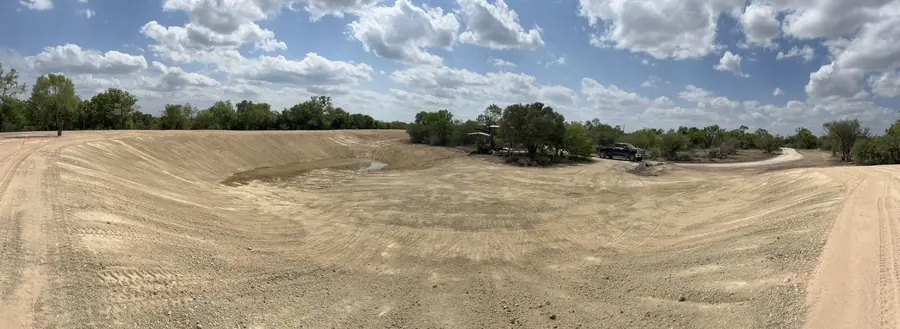
| Pond construction and repair | Erosion control | "A minimum of one project must be implemented and maintained every 10 years", and it "must provide habitat diversity and wildlife benefits" |
| Wildlife water | Supplemental water | In addition to livestock water, and "may require protection from livestock" |
So selective cedar clearing on a schedule, or a pond built for wildlife benefit, can be part of a plan. The plan decides how, and the appraisal district decides whether it qualifies.
What we can and cannot do
- We can clear brush selectively, on a schedule, laid out for wildlife. See cedar and brush clearing.
- We can dig ponds and tanks. See stock tanks and ponds.
- We can describe the work plainly so it fits your records.
- We cannot tell you your land qualifies, write your plan or promise a tax outcome. Ask your appraisal district and TPWD.
Common questions
Does cedar clearing count toward a wildlife valuation?
Brush management is a habitat control practice in TPWD's guidelines. Whether yours counts depends on your plan and your county appraisal district.
Does building a pond help my wildlife valuation?
Pond construction and repair is an erosion control practice in TPWD's Edwards Plateau guidelines, at a minimum of one project every 10 years with wildlife benefit. The appraisal district decides.
Can I switch straight from no valuation to wildlife use?
Generally no. The land must already be qualified open-space land, which usually means agricultural use for five of the preceding seven years.
What is the minimum acreage?
It is set county by county by the appraisal district. Ask yours.
Talk to us about your land
Every piece of land is different. Call (830) 328-3684 or send the form for a free estimate. See our cedar & brush clearing service.